0 Transfer From Malpensa To Milan: Your 2026 Guide
- Travel Tips
- by Tara Malone
- 27-06-2026
Transfer From Malpensa To Milan: Your 2026 Guide
You've landed at Malpensa, your phone battery is lower than you'd like, your luggage feels heavier than it did at departure, and now the question starts: what's the smartest transfer from Malpensa to Milan?
Many first-time visitors make a small mistake that creates a long first day. They compare only the ticket price. They don't compare the full trip. That means waiting time, walking, station stairs, the last taxi from Centrale or Cadorna, and the work of moving bags when you're already tired. Malpensa isn't a quick city airport run. It's a proper airport-to-city transfer, and your best option depends less on theory and more on who you are, when you land, and where in Milan you need to go.
If you're arriving with children, heavy luggage, a pet, or unusual baggage, planning matters even more. Travelers bringing animals should also check the current airline pet travel requirements for 2026 before departure, because airport transfers get much easier when your airline paperwork is already in order. And if you're still deciding where to stay and how to move around once you arrive, this local guide to Milan tourist places, public transport options, and airport transfers is a useful companion.
Table of Contents
- Arriving in Milan Your First Step From Malpensa Airport
- Comparing Your Malpensa Transfer Options at a Glance
- The Public Transport Route Train and Bus Explained
- Hailing a Taxi vs Booking a Private Transfer
- Why a Private Transfer Is Best for Groups and Families
- Insider Tips for a Flawless Arrival in 2026
- Your Sample Itinerary and Making the Right Choice
Arriving in Milan Your First Step From Malpensa Airport
A lot of travelers expect Malpensa to work like Linate. It doesn't. Malpensa is about 25 miles (40 km) from Milan, and the airport handled 28.5 million passengers in 2024. That's why arrivals can feel busy and why many people pre-book transport instead of deciding on the spot, per Milan Malpensa Airport data.
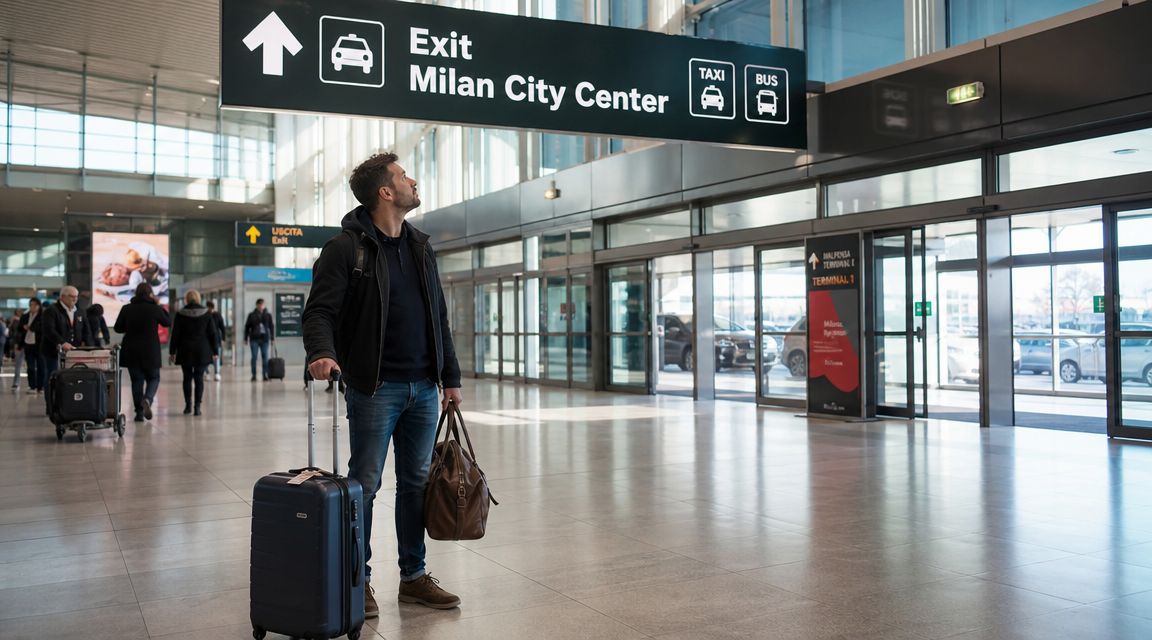
That distance changes the way you should think about your arrival. You're not picking between two similar urban options. You're picking between four very different systems: train, bus, taxi, or pre-booked private car. Each one solves a different problem.
The train is the cleanest choice if you're traveling light and staying near a main station. The bus can be good value when traffic is light and your budget is tight. A taxi is simple if you want to leave immediately and don't want to plan ahead. A private transfer is usually the least stressful option when the journey has more variables than usual, like children, lots of bags, a late arrival, or a hotel well away from the rail hubs.
Practical rule: Don't judge the transfer from Malpensa to Milan by the airport-to-station leg alone. Judge it by the time you reach your hotel door.
The first mistake I see visitors make is overvaluing the cheapest ticket. The second is assuming all central Milan destinations are equally easy from Centrale or Cadorna. They aren't. If your apartment is down a narrow street, your hotel is in a business district, or you're arriving after a long-haul flight, the final stretch often decides whether public transport still feels like a bargain.
Comparing Your Malpensa Transfer Options at a Glance
If you want the quick answer, use this rule. Solo traveler with one bag and a central destination? Train first. Group, family, heavy luggage, or late arrival? Door-to-door road transfer usually makes more sense.
Here's the practical comparison.
| Transfer Option | Average Cost (per person) | Journey Time (to city center) | Convenience | Best For |
|---|---|---|---|---|
| Malpensa Express train | Around €12 | About 35 to 50 minutes | High if you're staying near a station, lower if you need extra connections | Solo travelers, couples, business travelers near Centrale or Cadorna |
| Airport bus | Around €10 | About 50 minutes | Moderate, but tied to road traffic and fixed drop points | Budget travelers with light luggage |
| Official taxi | Varies by party size, with fixed fare to central Milan often around €100 to €110 | Road time varies | High door-to-door convenience, no pre-planning required | Travelers who want immediate departure |
| Pre-booked private transfer | Varies by vehicle and group size | About 50 minutes in typical conditions, but traffic affects road travel | Very high, especially for hotel drop-off, luggage, and late-night arrival | Families, groups, executives, late arrivals |
The biggest trap is comparing the train ticket with the full cost of a private car as if they solve the same problem. They don't. The train buys you a seat to a major station. A road transfer buys you a ride to your exact address.
The trade-off that matters most
Public transport usually wins on headline price. That part is real. But once you add the last-mile segment, public transport can stop being the easy choice.
A common example is a couple staying in a hotel that isn't within easy walking distance of the station. The train gets them into Milan efficiently, but then they still need to find their way through platforms, exits, street level, and another short ride with bags. The cash outlay may still be lower, but the total journey effort rises sharply.
Cheap and efficient aren't always the same thing. The cheapest line item can still produce the longest, most tiring arrival.
The best transfer from Malpensa to Milan depends on which cost matters most to you. Money, time, effort, or uncertainty. Most travelers only compare the first one.
The Public Transport Route Train and Bus Explained
Public transport works well from Malpensa when you use it for the right trip. It works less well when you expect it to be door-to-door.
How the train works in practice
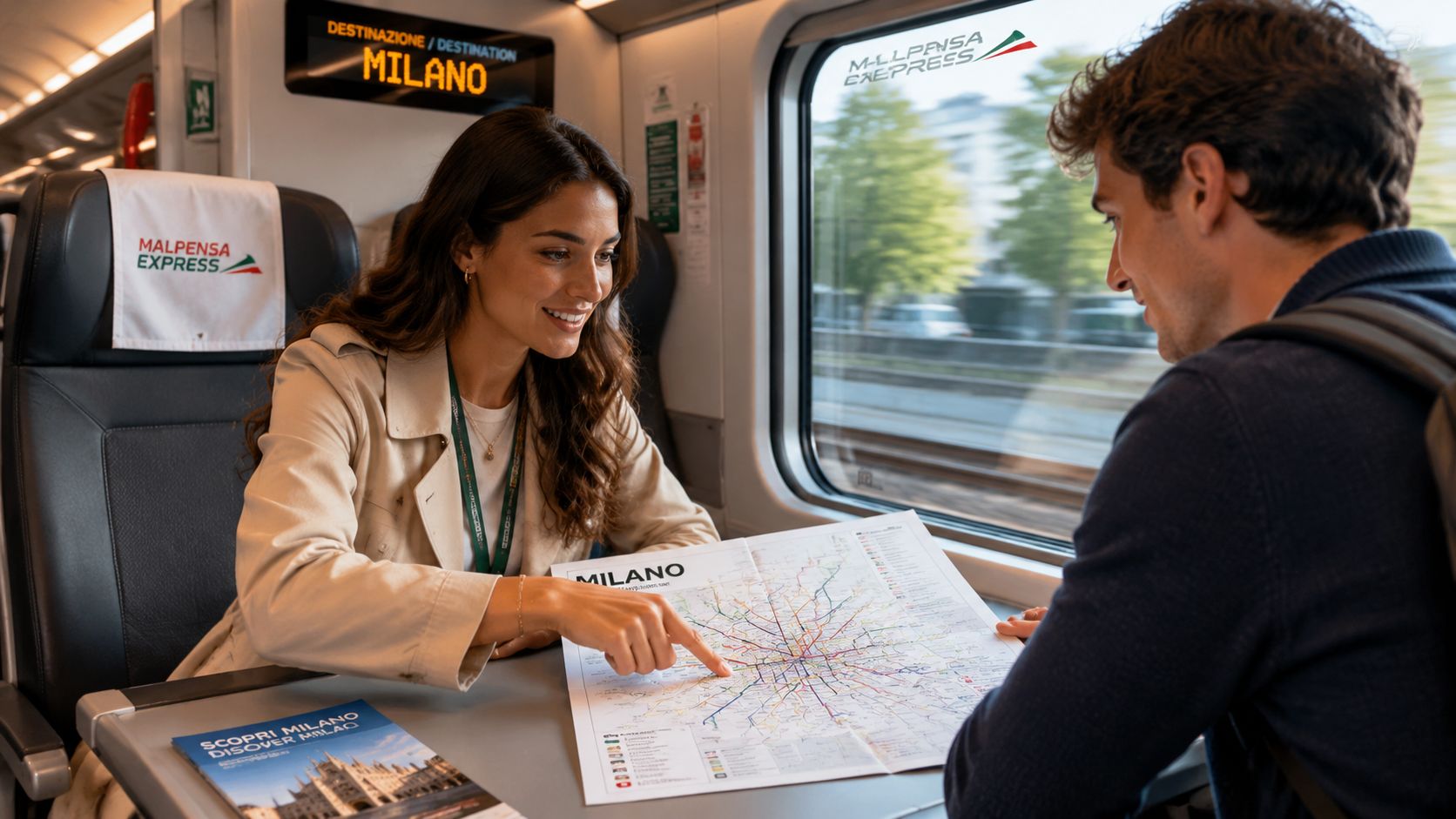
The Malpensa Express is the most predictable public option. It runs on a fixed 30-minute headway from early morning until late evening between the airport and Milan's main stations. That makes missed-train risk manageable because the next departure is usually half an hour away, per the official Malpensa train page.
That predictability is the train's real strength. Not raw speed. Predictability.
Take the train if your final destination is close to Milano Centrale, Cadorna, or another stop on the line and you're comfortable handling your own bags. It's especially sensible for business travelers heading straight into central Milan for a meeting, or couples traveling with cabin bags only.
A few practical habits make the rail option smoother:
- Know your final neighborhood: Don't just ask "Can I get to Milan?" Ask whether your hotel is convenient from the station you'll arrive at.
- Travel light if possible: One rolling suitcase is manageable. Multiple large bags change the experience.
- Build in the station exit time: The train arrival isn't the same as the hotel arrival.
- Check late-evening timing: Rail service is reliable within its operating window. It isn't an all-night solution.
When the bus makes sense
The airport bus is usually the lowest-friction low-cost option for people who don't want to deal with platforms. You board, sit down, and ride into the city. For some visitors, that simplicity beats the train, even if the journey depends more on road conditions.
The trade-off is obvious. Buses share the same roads as cars. If traffic is clean, the ride is straightforward. If traffic isn't, you feel every extra minute.
The bus usually makes sense for these travelers:
- Budget-first visitors: You care more about saving money than saving uncertainty.
- Students and backpackers: You're fine with a central drop point and another local connection.
- Travelers staying near the bus drop-off area: Your destination needs to match the route. Otherwise the cheap fare becomes less meaningful.
This walkthrough gives a feel for the public route before you travel:
What doesn't work well is treating bus or train as universally interchangeable. They aren't. The train wins when timing certainty matters. The bus can be simpler if the drop-off point suits you. Both lose value when your hotel is awkward to reach from the city stop.
Hailing a Taxi vs Booking a Private Transfer
Road transport from Malpensa gives you the one thing public transport never fully does. A single uninterrupted trip from airport curb to your address.
What an airport taxi does well
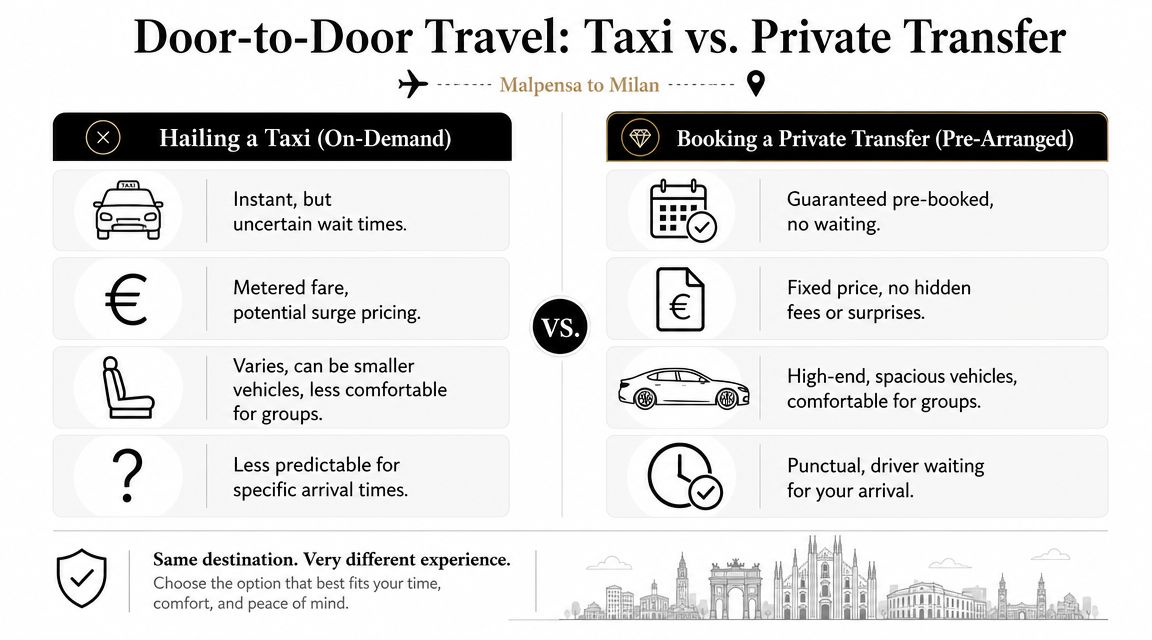
A taxi is the straightforward on-demand choice. You land, follow the signs, join the official queue, and leave when it's your turn. For many travelers, that's good enough.
The main advantage is immediacy. You don't need to reserve in advance, and you don't need to think about stations, transfers, or ticket machines. That's useful after a delayed flight or a long immigration line when you just want the first available car.
There are practical limits:
- Queue exposure: When arrivals are heavy, you may wait.
- Vehicle variability: Some cars suit solo travelers better than families with large luggage.
- Less planning certainty: You're relying on airport supply at the moment you arrive.
Taxi pricing to central Milan is often quoted as a fixed fare around €100 to €110, and some route guides also show broader estimates depending on platform and conditions, as noted earlier in this article from the verified transport references.
Where private transfer services win
A private transfer solves a different problem. The point isn't speed. It's removing uncertainty from the parts of the journey that usually create stress.
A private transfer from Malpensa usually takes around 50 minutes door to door, with actual road time varying by traffic and exact drop-off point. Its operational advantage is 24/7 availability, meet-inside-terminal pickup, and no last-mile break in the journey, per TM's Malpensa transfer page.
If your arrival has several moving parts, the most valuable thing you can buy isn't speed. It's certainty.
A pre-booked service can be more useful than a taxi for certain trips:
- Late-night arrivals: You don't want to discover your public options have thinned out.
- Heavy luggage: The driver meets you, rather than you hunting for the next step.
- Specific pickup expectations: Meet-and-greet matters if you want the cleanest handoff after customs.
- Group coordination: One booking is easier than sorting transport in pieces.
For travelers comparing operators and service styles, this guide on car service in Italy in 2026 and how to compare transfer options is a helpful reference.
One practical example is TransferMilan LLC, which offers fixed-price airport transfers from Malpensa with meet-and-greet service and vehicle options from sedans to larger group transport.
Why a Private Transfer Is Best for Groups and Families
The math changes once more than two people travel together. That's where most generic airport guides stop being useful.
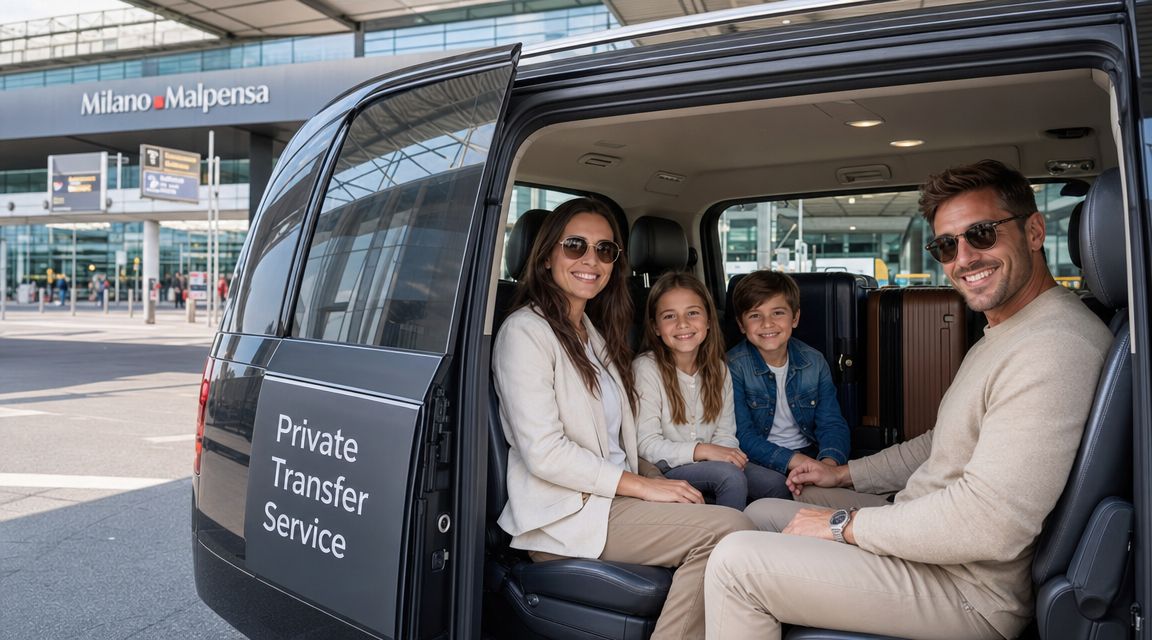
The math changes once you are not traveling alone
Public transport from Malpensa is cheap per person. The train is around €12 one way and buses are around €10, while the taxi fare to central Milan is around €100 to €110. For groups of 4 or more, a pre-booked private minivan can hit a comparable per-person rate while removing the extra burden of managing luggage and onward connections, per the TM Malpensa to Milan transfer guide.
That comparison matters because families often price the first leg only. They calculate rail tickets and stop there. In reality, the full trip may include a walk, a metro ride, or a short taxi from the station to the hotel.
For a group, the decision usually becomes less about "What is the cheapest mode?" and more about "What is the cheapest complete arrival that nobody hates?"
The hidden effort matters more than people expect
A family with strollers and oversized suitcases experiences Milan differently from a solo traveler with a backpack. The train station may be efficient. It still requires navigation. So does the hotel approach after you arrive.
Private road transfers suit groups well because they cut the number of separate decisions. One vehicle. One pickup. One drop-off. Everyone stays together.
That helps in situations like these:
- Families with children: Keeping everyone in one vehicle is easier than managing a platform and a final taxi.
- Groups sharing an apartment: Street-level door drop matters when the address isn't near a station.
- Friends arriving for events: You avoid splitting up or juggling multiple ticket purchases.
- Travelers with bulky luggage: Ski bags, trade fair samples, and multiple suitcases change the practical math fast.
A group rarely remembers saving a little on tickets. They remember the first hour of the trip and whether it felt organized or chaotic.
Child seats, luggage space, and a single fixed booking matter more than most people realize before landing. After landing, they matter immediately.
Insider Tips for a Flawless Arrival in 2026
A smooth transfer from Malpensa to Milan often comes down to small details that airport roundups skip.
The Terminal 2 detail many guides skip
Not every arrival drops you in the best position for rail or coach connections. A lot of low-cost traffic uses Terminal 2, and that adds an extra step many travelers don't expect.
Malpensa runs a free shuttle between Terminal 1 and Terminal 2 every 15 minutes, which is useful but still adds waiting and movement time if your chosen transport leaves from the other terminal, per the airport's terminal connections page.
If you arrive at T2, do this before choosing your transfer:
- Check where your next leg departs from. Don't assume all trains and buses are equally convenient from both terminals.
- Factor the shuttle into your real arrival time. The transfer itself is free, but it isn't instant.
- Reassess if you are already tired or delayed. A direct road transfer may become the smarter call.
What to do if your arrival goes off plan
Delayed landing. Late baggage. Child asleep in your arms. Lost energy after a long-haul flight. When that happens, the "best" option changes.
Use these rules:
- If you land late and want certainty: Take a pre-arranged door-to-door ride.
- If your destination is not near the main stations: Don't force the train just because it looks efficient on paper.
- If you're heading beyond central Milan: A direct car often makes more sense than stitching together airport rail plus city rail plus a local taxi.
This applies even more if you're going onward to places outside Milan proper, like the lakes, exhibition venues, or towns where station access is less convenient than map apps make it seem.
Your Sample Itinerary and Making the Right Choice
The right call depends on your travel profile more than your travel style.
The solo backpacker: Take the train if you're staying near a major station and arriving within rail operating hours. You'll get a predictable, low-cost transfer and can handle the last stretch yourself.
The couple on a city break: If your hotel is central and your luggage is light, train works well. If you're arriving tired or staying in a less convenient pocket of the city, a road transfer may start the trip better.
The business executive: Choose a pre-booked private car when timing, presentation, and direct hotel arrival matter more than shaving cost. The value is control.
The family with kids and strollers: Book a private transfer. Door-to-door convenience usually outweighs the lower public fare.
The group of friends: Compare the full public cost against one minivan, not one train ticket against one vehicle. The result is often closer than expected.
If Milan is only your first stop and you're planning to continue beyond the city, this guide to explore unique Italian towns is worth bookmarking for the next leg of the trip.
The right transfer from Malpensa to Milan isn't the same for everybody. If you care about total journey time, luggage handling, and arriving without friction, door-to-door transport wins more often than first-time visitors expect.
For travelers who want a fixed-price ride with meet-and-greet service from Malpensa to Milan or onward across northern Italy, TransferMilan LLC offers airport transfers, larger vehicles for groups, and direct hotel or apartment drop-off. It's worth getting a quote before you fly, especially if you're arriving late, traveling with family, or carrying more luggage than you want to drag through a station.